
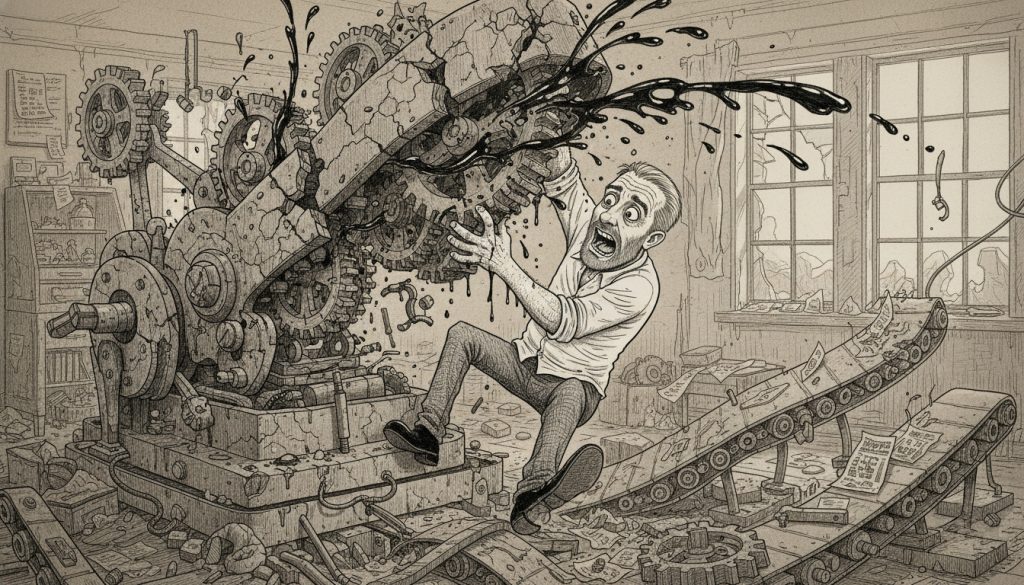
Your funnel isn’t sick. It’s septic. And everyone is acting like another nurture email will cure it.
Here is the quiet scandal: you wired up a platform, flipped a few toggles, and then went back to dreaming in dashboards. No one has touched the guts in months. A marketing automation audit would read like a crime report, not a progress update. Leads loop. Triggers misfire. Contacts rot in segments that no longer exist. You’re paying for software to sabotage you, neatly and on schedule.
Teams brag about scale while drowning in stale delays and fantasy scoring models. You are not automating growth; you’re automating waste. Every quarter you sit on it, you tighten the knot. It’s a conveyor that looks busy while it drops every fifth box into a hole.
Fine. Here’s Where The marketing automation audit Earns Its Keep
Let’s step out of the outrage and tell the obvious truth. When you don’t review automation, workflows fossilize. What once fit a campaign now chokes it. Contacts get stuck in loops or fall through cracks. Lead routing slows to a crawl, and conversion sinks because the rhythm is off by weeks.
Picture 10,000 leads flowing through your system each month. If 5 percent get misrouted, stuck, or mis-scored, that’s 500 chances gone. Not hypothetical. Gone. Over a year, this isn’t a rounding error. It’s a quiet tax on pipeline and credibility.
And credibility is the currency you are actually spending. When the system lurches, sales stops trusting the feed. They ignore alerts, bin the MQLs, and tune out your next campaign. Your CRM stops being a revenue driver and turns into a crowded attic where no one wants to look for anything important.
This is where audits matter because they make the invisible expensive again. You catch outdated delays that stall momentum. You remove conflicting triggers that fire twice and anger prospects. You fix naming, segmentation, and scoring so your data stops gaslighting you. According to Walker Sands, “Marketing automation system audits uncover problems and opportunities. Enjoy reduced stress and discover the path to higher marketing automation ROI,” underscoring that clarity and ROI travel together.
Audits are not a teardown. They are the moment you stop letting a stack of timers and tags pretend to be strategy. The software is useful and dumb at the same time. It will do exactly what you told it last year, even if that instruction is now a liability. So you review, you correct, you simplify. Not to be perfect. To be accurate enough to sell.
Enough Noise. Here’s How You Take The Wheel
Light the Match, Don’t Build the Bonfire
Start your marketing automation audit by picking one core workflow or process that drives revenue or engagement. Don’t try to fix every single automation at once. Focus on the biggest leak or the most important campaign where you can get clear data. This will give you a quick insight without overwhelming the team.
Build the Version That Scales
After your first fixes, develop a repeatable audit checklist. Include checking trigger conditions, timing delays, segmentation logic, and integration points with other systems. This lets you systemize the marketing automation audit so you can confidently review all workflows before launching or scaling new campaigns.
Run the Review Loop
Make audits part of your regular routine. Don’t let your automation sit untouched for months. Schedule quarterly or monthly checks depending on campaign complexity. During reviews, fix broken links, outdated content, or poor-performing sequences. This keeps your automation current and effective.
Know When It’s Working (and When It’s Not)
Use simple KPIs aligned to your goals. Track open rates, click-throughs, conversion rates, and lead movement. Don’t just trust dashboards. Dive into data anomalies and watch for bottlenecks where leads stall. Your marketing automation audit isn’t just a checklist. It’s reading the signals that tell you when the system is healthy.
Insights from Markempa reveal that “cleaning data and improving segmentation enhances personalization and campaign effectiveness,” highlighting how data hygiene directly impacts marketing success.
Last Thing Before The Mic Goes Dead
If you haven’t audited lately, you are leaking value and training your team to live with it. Not a one-time fix. A standing appointment with reality. The point is simple: run the checks, fix what’s broken, and keep the machine honest so your data stops lying and your pipeline stops guessing. The longer you wait, the more you call chaos “normal.” Call it what it is: neglect with a subscription.
If you’re done improvising your growth plan, we help companies turn chaos into systems that actually ship. Book a Strategy Session.