
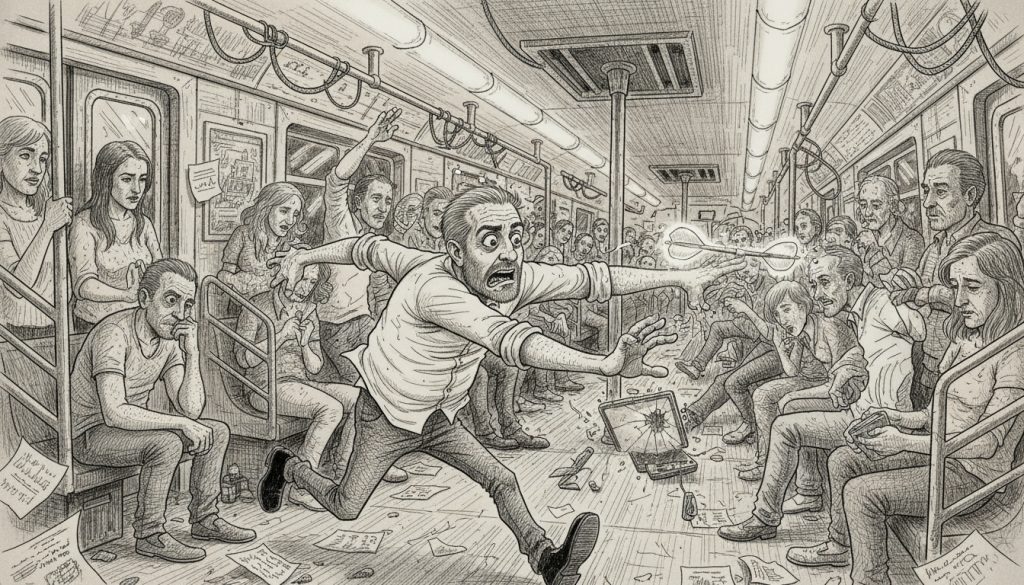
Stop celebrating impressions like they pay the bills. You didn’t earn attention; you rented a glance. The room keeps high-fiving view counts while the conversions quietly flatline. This is how budgets disappear: we grade ourselves on how many people walked past the window, not who walked in.
You keep asking what is hook rate like it’s trivia. It’s the first verdict. The measure of whether your opening line snaps a neck or gets ignored. If they don’t react fast, click, reply, watch past second three, you didn’t hook them. You just hosted a moment of polite indifference.
Hook rate is the meter that catches the first jolt. The split-second proof that your message made a hand move. Ignore it and you’ll run pretty campaigns that die in silence. Keep pretending opens mean interest, and you’ll keep reporting progress while the pipeline starves.
Fine. Here’s Where What Is Hook Rate Actually Bites
Let’s be honest. Most teams don’t measure the moment of impact because it exposes creative that looks good and performs like a cardboard sword. Hook rate puts a flashlight on the first seconds. If it’s weak, the rest of the funnel is make-believe.
Example: your email shows a 40 percent open rate. Feels strong. Then only 5 percent click in the first beat. That 5 percent is your real audience. Everyone else skimmed and vanished. Without hook rate, you will never know that your headline is winning attention while your first sentence is losing the sale.
In video, the stakes are even louder. According to Vixen Digital, “A Hook Rate applies specifically to videos. The term refers to the percentage of video viewers who watch the first crucial few seconds of your video,” which is a polite way to say your opener either keeps them or loses them before your story even starts.
This isn’t about worshiping a single number. It’s about respecting sequence. If the first move fails, nothing after it matters. Improve hook rate and the rest of the system finally has something to work with. Ignore it and you’re just rearranging furniture in an empty house.
Exhale. Here’s the plan before your spend evaporates.
Start Small, Start Visible
Don’t redesign your entire marketing machine before knowing your baseline hook rate. Use simple tools to track immediate reactions: clicks, taps, or quick responses. Start with a single email or social ad and measure how many people actually take action fast. Hook rate helps you spot if your content hooks early or needs a rethink.
Systemize What’s Actually Working
Once you identify what grabs attention, build it into your content consistently. Hook rate isn’t a one-off stat; it needs a steady pulse in your strategy. Make hooks part of your creative brief, test formats, headlines, and opening lines to see what moves the needle every time.
Run the Review Loop
Don’t let your hook rate slip back down after early wins. Regularly review your campaigns and keep the focus on quick engagement. If you see hook rates falling, drill down to why. Is messaging stale? Is the audience wrong? Use hook rate as a feedback loop to stay sharp.
Know When It’s Working (and When It’s Not)
Hook rate cuts through surface-level metrics. If it’s rising, you know your initial messages are cutting through the noise. If it drops, that’s a red flag before overall conversions crumble. Keep a close eye on hook rate to flag problems early and stay ahead of wasted spend.
According to [Gino Gagliardi](https://ginogagliardi.com/blog/hook-rate-hold-rate “Hook Rate and Hold Rate (The 2025 Guide)” 2025), “Hook Rate is the percentage that shows how scroll-stopping your ad is by calculating the percentage of 3-second video plays in relation to ad impressions,” which emphasizes the importance of quick viewer engagement to campaign success.
The Last Thing Before The Meter Goes Dark
Hook rate is the part of the report that refuses to lie. It tells you whether your work made a hand twitch or left the room motionless. You can keep polishing decks and inflating impressions, but that is just hanging posters in an empty lobby and calling it an opening night. Measure the first reaction. Earn the second. Everything else is set dressing.
Stop counting footsteps outside the door.
If you’re done improvising your growth plan, we help companies turn chaos into systems that actually ship. Book a Strategy Session.