
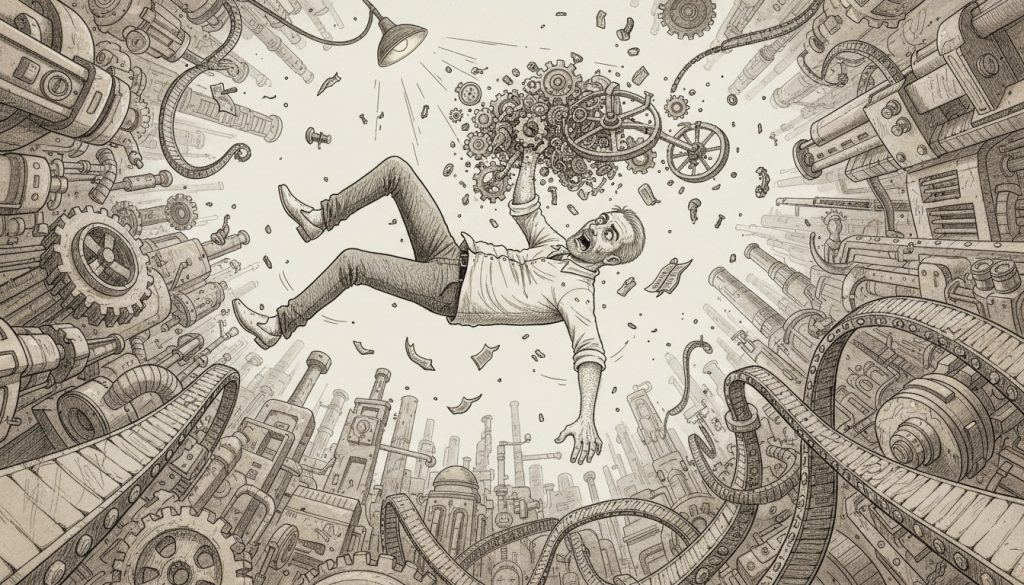
Stop confusing effort with value
Everyone keeps pretending manual work is craft. It isn’t. It’s a security blanket. Automation guilt is the story you tell yourself to feel busy while your calendar eats your brain. You’re not proving grit by hand-scheduling emails or babysitting spreadsheets. You’re just paying a toll in opportunities you no longer see.
If your week is a museum of tiny tasks, you’re not in control. You’re in denial. The job is to move outcomes, not to be the human middleware between tools that should talk to each other without you.
Why It Matters
Marketing didn’t get simpler. It fractured. Channels grew. Targets multiplied. Data exploded. And somewhere in that pile, teams started worshiping the feeling of control instead of the reality of progress. Manual effort looks virtuous on a timesheet. In a pipeline, it looks like drag.
Here is the quiet math your org avoids. Ten hours a week spent on handcrafted follow-ups, list hygiene, and “quick checks” is not neutral. It is ten hours not invested in concepting, testing, or fixing the offer that is actually leaking revenue. That’s not discipline. That’s drift.
Manualism also breaks in exactly the places your brand cannot afford. The follow-up that never went out because someone was buried. The segment that excluded the highest-intent cohort because a CSV field was mislabeled. The “final-final” send that shipped to the wrong timezone. People don’t ignore you because they hate your product. They miss you because you missed them.
And yes, tools are imperfect. They require setup, sanity checks, and adult supervision. But the alternative is worse. You cannot keep asking humans to emulate software at scale. That road ends with burnout dressed up as heroics and creative work squeezed into the margins like a hobby.
Meanwhile, real teams are cashing the dividend. According to Superagi, a local retail boutique that implemented Mailchimp’s automation platform saw retention jump 78 percent and sales climb 25 percent. That wasn’t magic. It was consistency, delivered on time, every time, without a human flinch.
Specialists are building entire revenue engines around this. Boutique lifecycle shops design behavior-based journeys, reactivation plays, and segmentation that compounds over time. Reports like “inbeat.agency” highlight multi-year returns that make the manual approach look quaint. The point isn’t to worship the tool. It’s to stop kneecapping your team with rituals that serve anxiety, not outcomes.
If you’re clinging to the keyboard because it feels safer, be honest. You don’t trust the system. Fair. Then fix the system, don’t martyr your best people to it.
This is the part where we stop complaining and start diagnosing.
Start Small, Start Visible
Don’t dump your whole workload on automation at once. Pick one repetitive task, like scheduling social posts or updating spreadsheets. Set it up quickly, then watch how much time it frees up. Seeing a real win will squash some of that guilt and get people on board.
Systemize What’s Actually Working
Once you see automation take the strain on one task, build a system around it. Document how it works and integrate related tasks. This way, automation isn’t some black box — it’s part of your team’s playbook. That method cuts guilt because everyone understands what’s happening.
Keep It from Sliding Back into Chaos
Automation guilt often creeps in when teams don’t track results or feel disconnected from the process. Run quick reviews to ensure the tools are doing their job. Adjust where needed. This discipline turns automation from a one-off experiment into a reliable habit.
Know When It’s Working (and When It’s Not)
Don’t trust dashboards blindly. Look for real signals: did the team save time, did errors drop, did response rates improve? Use those to diagnose and fix automation guilt. Once the data backs you up, it’s easier to get everyone off the fence.
Wrap-Up
Every dashboard hides a small confession
We romanticize manual control because it lets us blame effort when outcomes stall. It feels noble to grind. It’s also a way to avoid the harder work of designing systems that don’t need you watching them to behave. Let the tools carry the weight they’re built to carry. Put your team where judgment, taste, and timing actually matter.
This is the kind of system our team builds for growth companies who want proof, not promises.