
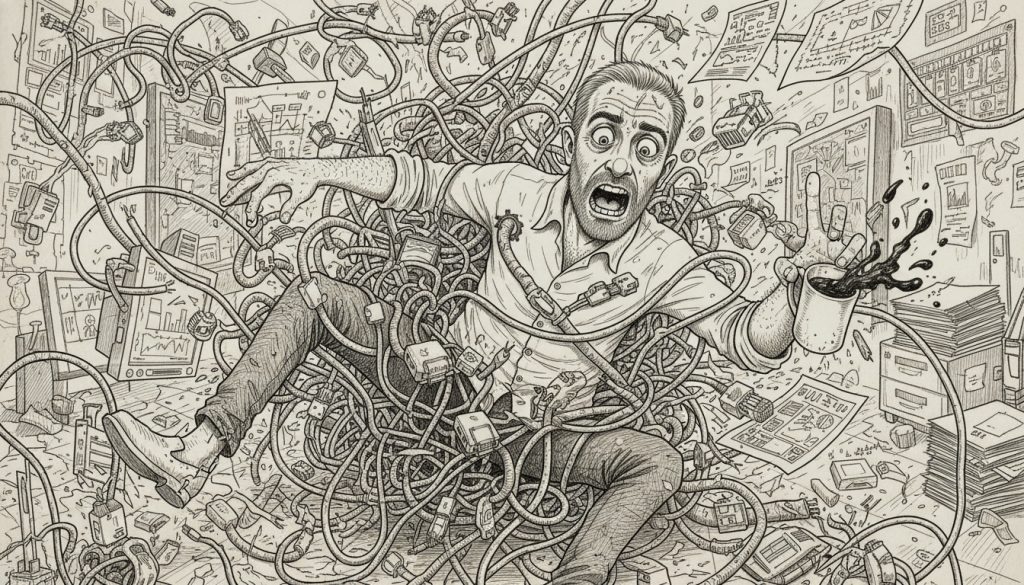
The Part Everyone Pretends Not To See
I just walked out of a meeting where someone said automation would fix our pipeline once we plugged it in. Like a Roomba for revenue. Sure. Then the wrong people get hammered with the wrong emails at the wrong time, and we act shocked when they vanish. The truth is uglier. These common marketing automation mistakes are not accidents. They are shortcuts we blessed as strategy.
You fed your tools vague goals, stale segments, and wishful timing. Then you blamed the platform when it stamped your sloppiness onto thousands of inboxes at scale. Automation does not forgive. It only amplifies. If your logic is lazy, your outputs are loud and embarrassing. You are not saving time. You are buying a louder megaphone for your blind spots.
Alright, Here’s Where common marketing automation mistakes Actually Matter
The mess is expensive. Not just in broken workflows, but in reputation. When the sequence repeats, the tag never fires, or the alert never lands with sales, you burn hours, budget, and credibility you cannot buy back. Every misfire teaches prospects a simple lesson: you are not paying attention.
And yet, automation is not the villain. It is a mirror. It shows you whether your strategy is precise or performative. The system is dumb and useful at the same time. Dumb, because it will do exactly what you tell it, even if what you tell it makes no sense. Useful, because it gives you leverage if you give it clarity. That leverage is the only reason to keep going.
Real people have eaten the cost of getting this wrong. Overdone sends, sloppy data, and brittle workflows come with a tab. As WT Marketing points out, over-automation and poor data management invite low engagement, wasted resources, and churn. Not thrilling. Just predictable.
The rot usually starts before launch. Teams kick off sequences without clear objectives, then argue with their dashboards. You cannot measure intent you never defined. ExpertSender hammers the obvious: no goals, no meaningful analysis. You either name the outcome or you drown in vanity.
Then comes the volume problem disguised as scale. One B2B SaaS team automated onboarding without segmenting. Surprise: low engagement, high unsubscribes. When they finally segmented by behavior, engagement jumped 35%. That case, cited by Campaign Creators, is not a miracle. It is competence.
Data is the silent saboteur. Duplicates, stale fields, missing IDs. Your abandoned cart series whiffs because the list is trash. Higher Logic puts it plainly: integrate your CRM, clean your data, audit it often. Otherwise you are pouring fine wine into a leaky paper cup and calling it a tasting.
Finally, the handoff. Marketing insists they “generated demand.” Sales never sees the signal or agrees on what a qualified signal even is. No shared definitions, no shared KPIs, no follow-up. Alignment is not a slogan. It is the difference between momentum and dead air.
Take a breath; here’s the disciplined part that actually moves numbers.
Start Small, Start Visible
Focus on one or two simple workflows first. Don’t try to automate your entire funnel at once. Pick the campaigns that have the biggest impact and watch how they perform. That way, you understand how your tools work before scaling up. Diagnosing common marketing automation mistakes begins with seeing where your current setup trips up.
Build the Version That Scales
Once you have a functioning workflow, systemize it. Clean up triggers, segment audiences properly, and map out clear customer journeys. If your campaigns aren’t designed to handle scale, they’ll break when volume grows. Build automation with growth in mind, not just patchwork quick fixes.
Run the Review Loop
Set a regular cadence to review your automation rules and results. Automation is not a set-it-then-forget-it task. Check for broken links, missing tags, and outdated conditions. Adjust your messaging based on engagement data. Keeping this habit prevents your marketing from sliding back into chaos.
Know When It’s Working (and When It’s Not)
Don’t obsess over vanity metrics like open rates or clicks alone. Look for meaningful signals: conversions, revenue impact, customer feedback. Spot the red flags early, like sudden drop-offs or spam complaints, and fix them fast. Being able to read the signals of common marketing automation mistakes means you stop problems before they grow.
Last Honest Thing Before You Hit Send
Most teams do not have an automation problem. They have a courage problem. It takes nerve to define one outcome, ship the smallest version, and look at it under bright light every week. It takes more to admit your data is dirty, your timing is off, and your sequences sound like a parking ticket. Do the boring, visible work. Give the machine clear instructions. Share definitions with sales. Then let the tools do what they are good at: repeating what you finally got right.
You are not building a robot. You are building a routine. And routines either make you sharper, or they make you numb.
If you’re done improvising your growth plan, we help companies turn chaos into systems that actually ship. Book a Strategy Session.