
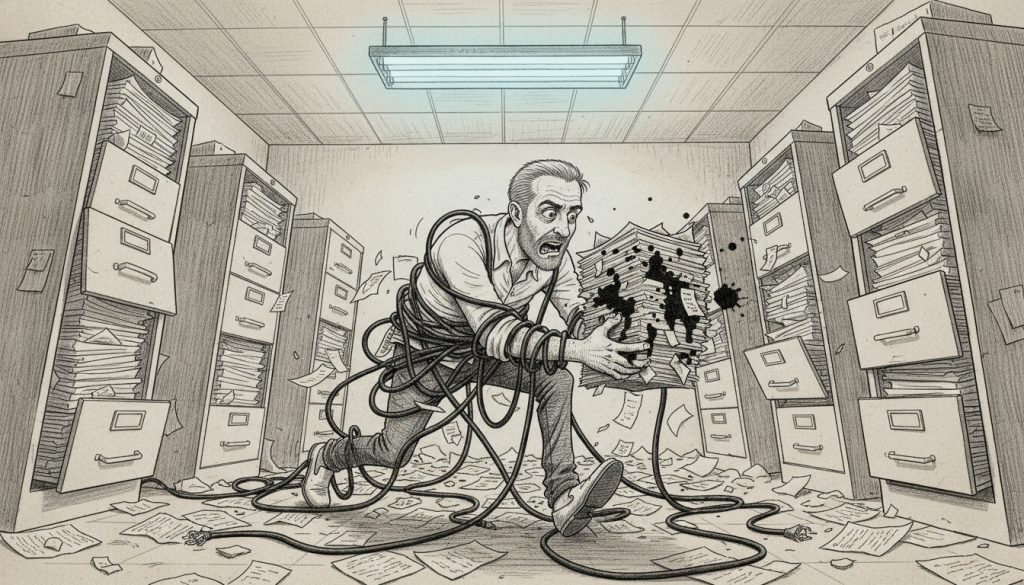
You keep treating your content like a chore chart. Write a plan, spin up a calendar, stuff it with topics, call it strategy. Then you wonder why the numbers sag and the team hates Mondays. It is not the output. It is the way you work. The rot is in the routine.
Here is the part nobody says out loud in your weekly sync: your content strategy workflow is probably the reason your content underperforms. Not the market. Not the algorithm. Not the interns. You stitched together meetings, approvals, and tools into a slow parade that confuses ownership and kills momentum. You publish on time, then watch sales shrug. You switch headlines, swap formats, cry about channels. The process is the leak. And it is flooding everything.
So Here’s Where Content Strategy Workflow Stops Lying
We can sneer at the theater, but the machinery still matters. A solid workflow will not make a bad idea win, yet it stops a good idea from dying in committee. It reduces whiplash. It gives clarity to people who are tired of inventing their job description every Tuesday. That is the quiet power here. Not magic. Just fewer traps.
Even the vendors nod to this. Bynder details why workflows exist in the first place: to safeguard accuracy, consistency, and speed. That reads boring until you remember your last launch that slipped two weeks because one approval disappeared in a chat thread. Boring is cheaper than a miss.
And the practitioners doing this at volume are not winging it. They treat analysis, ideation, production, distribution, and refresh as one connected line, not five separate hobbies. That is the point of the seven-step spine you see from teams like Siege Media: fewer ad hoc detours, more compounding gains. You can pretend your brand is different. Your deadlines will not care.
Here is the sober truth. The workflow is not a totem you present to leadership. It is a living system that either reflects reality or fabricates it. If you do not tune it, it calcifies. When it calcifies, the work slows, the message blurs, and the org stops believing. That disbelief shows up first in missed topics, then in rushed fixes, then in flatline analytics that everyone tries to explain with a new acronym.
So yes, the process can be dumb. Checklists, briefs, approvals. But the absence of process is dumber. It turns your team into a hallway of closed doors. You can either manage your sequence or be managed by it. Pick.
Enough talk. Here’s the shift you make now.
Get One Win You Can Measure by Morning
Don’t try to overhaul your entire content operation at once. Pick one part of the content strategy workflow that feels broken—maybe topic selection or feedback loops. Fix it in a way you can track quickly. Having a concrete win gives the team momentum and a clearer idea of what needs doing next.
Build the Version That Scales
Once you see what changes worked, design your workflow to handle more volume the same way. This is about making the process repeatable, not complicated. If your content strategy workflow is too rigid or full of unnecessary steps, it won’t last as your team grows or priorities shift.
Run the Review Loop
Schedule regular check-ins to review what’s working and what isn’t. Look at results and process. Then adjust your workflow accordingly. This stops things from sliding back into chaos and keeps your team aligned around real, current needs.
Know When It’s Working (and When It’s Not)
Use clear signals to judge the health of your content strategy workflow. These might be deliverables hitting deadlines, engagement moving up, or fewer rounds of revision. When the signals start fading or false positives show up, it’s time to dig in and course-correct before problems snowball.
Start thinking about your content strategy workflow not as a plan to set and forget but as a system to run and tune. Fix the parts you can measure, build what can scale, keep tabs on progress, and be ready to pivot when the signals change.
Last Notice Before The Lights Come Back On
Most teams are not short on talent. They are short on a spine that holds the work together when pressure hits. You can keep repainting the calendar every quarter, or you can admit the calendar is the symptom, not the cause. Build a sequence that survives real life. Make it find the gaps before the gaps find you. The difference between noise and momentum is usually one clean path from idea to publish that no one has to guess at.
If you are tired of pretending the train is on time, write the timetable that trains can keep. Then keep it.
If you’re done improvising your growth plan, we help companies turn chaos into systems that actually ship. Book a Strategy Session.