
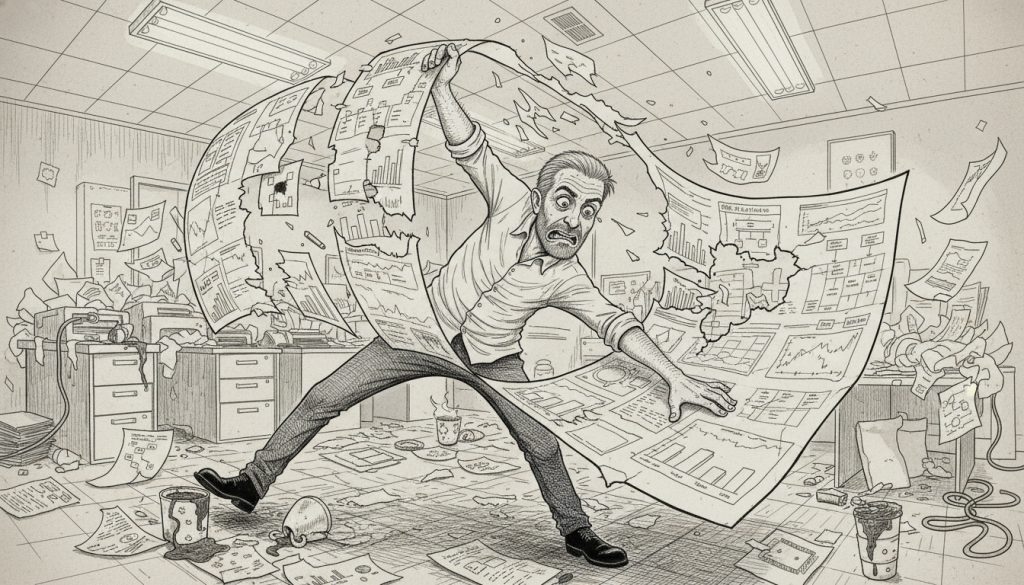
You keep parading a tidy graphic like it will save the quarter. The customer journey slide that makes executives nod and lets everyone pretend the chaos is obedient. It is pretty. It is calm. It is also where churn hides, where handoffs go to die, and where the story you tell yourself replaces the one your users are actually living.
You want a line. You have a maze. People skip steps, boomerang, ghost, then reappear with a different email and a colder wallet. Your slide does not capture that. It gives you comfort when what you need is an autopsy. It is a map drawn on a fogged window.
Where The Customer Journey Slide Starts To Matter
Here is the honest part. The slide is not the problem. Your relationship to it is. The diagram can be a mirror or a mask. Use it like a mirror and you find the snag in onboarding that drains trials by Friday. Use it like a mask and you torch a month’s budget aiming at a stage your customers never reach.
A half-true journey convinces teams to debate feelings instead of facts. Product ships features for a stage that is mythical. Sales wastes hours chasing leads that should have been rescued two steps earlier. Marketing buys attention for a moment the market is not in. A real journey model is not decoration. It is the circuit breaker you flip before the wiring cooks the walls.
There is an ugly win buried in this. When the journey reflects reality, you can intervene before the numbers scream. You catch the 20 percent drop at signup while it is still fixable. You spot the false positive that looks like adoption but is really curiosity with a short battery. You stop arguing personas and start fixing the stairs people keep tripping on.
Here Is The Moment We Trade Heat For Discipline
Start Small, Start Visible
Stop trying to map every customer interaction. Instead, focus on the key moments where users decide to move forward or abandon ship. Build a customer journey slide that highlights these moments, like first login, feature adoption, or renewal. Keep it simple but visible to all teams. It’s easier to improve a slide everyone understands.
Systemize What’s Actually Working
Your journey slide has to reflect reality, not theory. Use data from support tickets, usage metrics, or customer feedback to update your journey slide regularly. When the slide matches what’s happening on the ground, it becomes a trusted reference for decision-making.
Keep It from Sliding Back into Chaos
A one-off journey slide is useless. Make updating it a routine part of your marketing and onboarding rhythm. Set a schedule to review and tweak it as you learn more about your customers. This keeps the slide relevant and prevents it from collecting dust in forgotten folders.
Know When It’s Working (and When It’s Not)
Don’t just trust the slide as a static artifact. Track the impact of changes made based on what you see in the customer journey slide. For example, if you adjust onboarding messaging for a specific step, watch metrics around drop-off or engagement there. This helps you spot early if your journey slide is helping or misleading you.
If you want proof that specificity beats theater, look at how detailed persona roadmaps clarified handoffs in the field, like the approach captured by Megan Janicke. If you need scaffolding to avoid overcomplication, skim patterns and templates that emphasize key moments across teams from User Interviews. And if you are flirting with real-time inputs, note how orchestration lifts personalization in the wild per SuperAGI. Keep the references. Ditch the theater.
The Part Everyone Knows But No One Says
That glossy diagram is not a trophy. It is a diagnostic instrument, and it only works if you use it while the patient is still breathing. Treat it like a stale slide and you will keep mistaking motion for progress, lights for power, interest for intent. Stop hiding behind clean lines and start measuring the moments that pull people forward or push them out.
You do not need a bigger map. You need to believe what the real one is telling you.
If you’re done improvising your growth plan, we help companies turn chaos into systems that actually ship. Book a Strategy Session.