
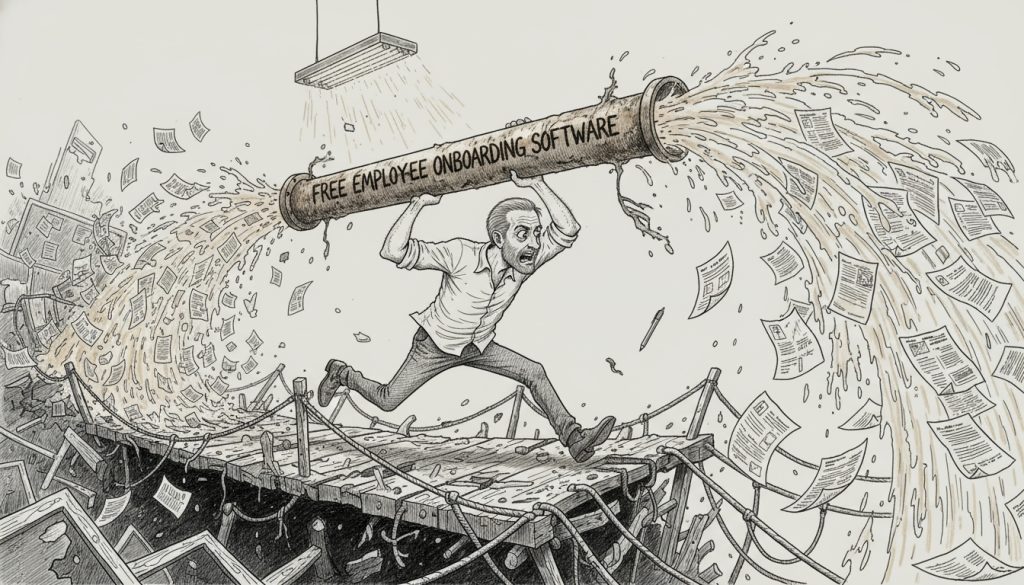
You keep calling it HR’s problem while your brand bleeds in the break room. New hires learn who you are before they learn what you sell, and the education comes from chaos, not craft. You want momentum but you hand people a map scribbled in pencil and change the hallways every hour. Then you blame timing, headcount, market headwinds. Please.
Here’s the part you don’t say out loud. The way you start people is the way they ship. If day one is a scavenger hunt, week six is a shrug, and quarter two is a quiet exit. Yes, tools matter. No, not because shiny solves stupid. Because the right free employee onboarding software forces you to name what matters, separate signal from ceremony, and stop pretending tribal knowledge is a strategy. Most teams won’t do that until a tool embarrasses them into it.
This Is Where free employee onboarding software Stops Being Optional
I get it. You’ve survived with docs scattered across drives and six Slacks deep to find the brand voice. It sort of works, like running a relay with mismatched batons. But there’s a reason real teams treat onboarding like a product, with version numbers and release notes. Good software doesn’t fix culture. It makes culture visible. And visible problems get solved.
When you standardize, people ramp faster and make fewer preventable mistakes. That’s not corporate poetry. That’s cycle time. One marketing lead I worked with cut ramp from two weeks to three days by aligning onboarding to the actual workflow instead of the org chart. They didn’t buy a miracle. They implemented discipline. The savings were not theoretical. Projects shipped sooner, fewer edits, less rework. That is budget you can count without apologizing.
You don’t need the kitchen sink, you need a spine. The right setup does three things. It front-loads context so people can act without begging for permission. It automates the drudgery so attention goes where judgment lives. And it gives you feedback that makes the next hire faster than the last. Free plans can do this if you keep them honest.
Even the platforms selling you the dream admit the useful truth. As Softr highlights, teams see real gains from self-serve portals and clean documentation, even on free tiers, because clarity beats ceremony every time. And Select Software Reviews points to what actually moves numbers: structured process docs, quick setup, faster first wins. Translation: if the process is coherent, the tool becomes a multiplier instead of a museum.
Also, stop pretending your project tool can’t pull this weight. Tools like ClickUp are being repurposed to centralize documents and run templated checklists that keep teams from missing steps, which AppsRhino lays out clearly. Are there limits on free tiers? Of course. Storage caps, thinner integrations, and the occasional feature carrot. But most marketing orgs don’t hit those ceilings until the real problem isn’t software, it’s the lack of a coherent path.
Here’s the twist. The tool isn’t the hero. It’s the mirror. If your onboarding is noise, software amplifies the noise. If you build it like a campaign, software amplifies the campaign. That’s the bargain you’re making whether you admit it or not.
Take a breath. Then build the rails you can actually run on.
Start Small, Start Visible
Pick a free employee onboarding software that lets you roll out simple modules first. Don’t try to switch everything at once. Start with the essentials: company intro, key contacts, and quick product overview. Show your team wins early so they buy in before you get fancy.
Build the Version That Scales
Once your basics work, pick up the pace and automate where you can. Your onboarding tool should be flexible enough to grow with your team size and complexity. You want a system that scales, not one you outgrow by your next major hire.
Run the Review Loop
Treat onboarding like a campaign. Ask new hires and managers for feedback early and often. Patch holes as soon as they pop up. This will keep the process tight and show you where your free employee onboarding software is working or falling short.
Know When It’s Working (and When It’s Not)
Look beyond usage rates. Measure things that matter: ramp time, errors in messaging, and engagement in company culture. If your onboarding tool doesn’t give you these signals, it’s just noise.
Last Thing Before The Room Goes Quiet
You don’t need a bigger sermon. You need fewer excuses. Onboarding is not a kindness. It’s operational truth with a deadline. Choose the simple tool that makes you define the work and expose the gaps, then keep shipping the next version before the paint dries. The rest is theater.
If you’re still letting people guess their way through day one, you are asking strangers to guard your reputation with a blindfold. That’s not scrappy. That’s expensive.
If you’re done improvising your growth plan, we help companies turn chaos into systems that actually ship. Book a Strategy Session.