
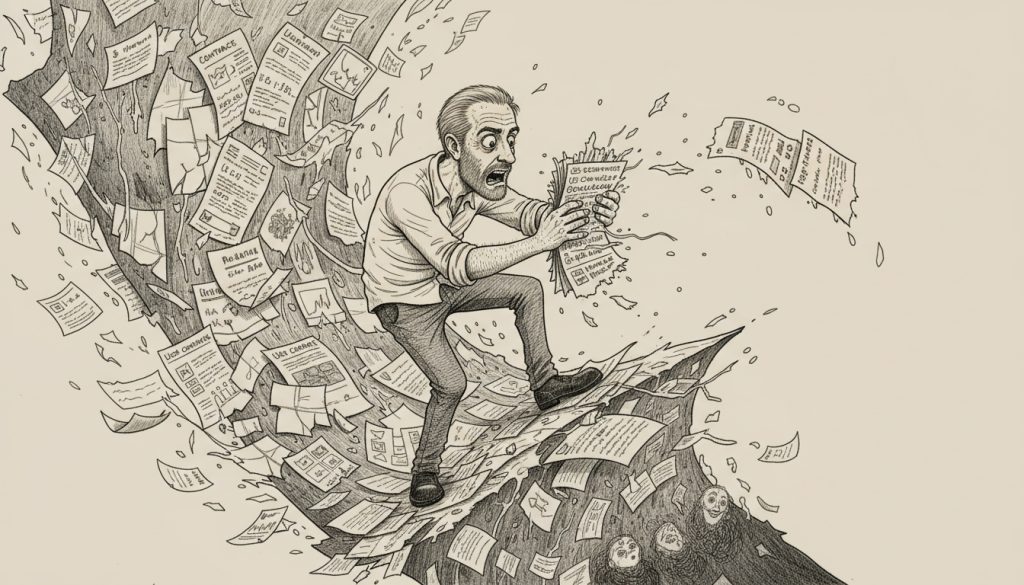
I just walked out of another victory lap where signups were up and champagne was metaphorically poured. Then someone whispered the retention numbers. That cheer you heard? It was a smoke alarm. You shipped the ad, not the outcome. You won the click and lost the customer in week one, because the plan after the confetti was a shrug.
Here is the quiet part you keep hiding under nice slide titles. Onboarding is not a tour. It is not a welcome email. It is not vibes. It is operations in the first 14 days, and if you do not treat it like a contract, you will keep paying a churn tax that the board mistakes for marketing waste. The fix is not another tooltip. It is a saas customer onboarding checklist that drags the user to value without mercy. Fewer steps. Fewer questions. Fewer chances to wander off. More proof, faster, that they were right to sign up. If that sounds rigid, good. Chaos is what got you here.
This Is Where The saas customer onboarding checklist Stops Being Cute
I get it. Checklists feel basic. They also keep planes in the sky. You can be clever later. Right now, you need every new account to cross the first value line without tripping. Because when onboarding misses once, trust evaporates, and people do not file tickets about it. They just stop logging in. That silent exit is the most expensive decision in your funnel.
Cutting complexity works because attention is rented. One product shortened its first-run flow from 10 steps to 5 and saw a 20 percent lift in 90-day retention. Not because it got prettier, but because it removed chances to bail. That is the job. Remove exits. Remove ambiguity. Replace both with proof.
Also, stop pretending time-to-value is a marketing slogan. It is a stopwatch. The clock starts at signup and ends at the first unmistakable win. If your timer is still running after the second session, you have a leak. If customers need to read a help center novella before they can act, you have a moat around your own product.
This is where the research you keep bookmarking actually helps. Practical patterns show up again and again in the wild: shortened paths, clear milestones, segmented nudges, and progress signals that reward movement. Go read them and then actually implement one by Friday. Start with what teams like Shopify and HubSpot codified around stages, milestones, and progress. It is documented, plainly, in resources like HelpCrunch and expanded with specific examples in GrowthRocks. If you need the broader tour with a printable list, yes, even Docebo has the receipts.
You do not need 40 features to succeed. You need one outcome that happens quickly, predictably, and repeatably. The checklist is a forcing function that keeps teams from gold-plating the foyer while the door is still locked.
Take a Breath. Now We Turn Heat Into Process.
Start Small, Start Visible
Focus on the core steps that get a user to their first win. This isn’t about overwhelming customers with every feature upfront. It’s about clear signposts that show value fast. Build your SaaS customer onboarding checklist around this quick success. When users see progress immediately, they stick around.
Systemize What’s Actually Working
Don’t guess what helps users onboard. Use data and feedback to spot which steps move customers forward. Then lock those into your checklist. Drop anything that confuses or stalls users. Build the version that scales by doubling down on what works, not what sounds good.
Make It a Habit, Not a One-Off
Onboarding doesn’t end after the welcome email or first login. Repeat key training, check in on progress, and keep nudging users toward your product’s core benefits. Keep it from sliding back into chaos by embedding reminders and follow-ups in your checklist.
Know When It’s Working (and When It’s Not)
Track user actions linked to your onboarding steps. Don’t stop at dashboard numbers. Look for signals like stalled activity, repeated questions, or feature avoidance. Spot the red flags before they cost you. Adjust your SaaS customer onboarding checklist based on what these signals tell you.
Last Thing Before The Sound Cuts Out
Here is the part no one wants to say out loud. Most teams are not failing at onboarding because they cannot design. They are failing because they refuse to decide. Decide the first win. Decide the sequence. Decide what gets cut. Decide who owns the week-one outcome and hold them to a metric that is not a vanity graph.
If you do this right, your dashboard gets quieter. Fewer tickets. Fewer executive pings. Fewer panicked experiments. It feels almost boring, like a machine that just runs. That boredom is profit. It is also the only way you earn the right to do the creative work you keep wishing people would notice.
You can keep selling features like a late-night infomercial. Or you can build a path that makes one promise and keeps it. Not in theory, not in a deck, but in the way a new user moves through your product without tripping over your process. Think less demo theater, more assembly line that produces outcomes on schedule.
Here is the image that should haunt you the next time someone says the signup spike is a win: an empty dashboard with a fresh account that never breathes. The cursor blinks. No tasks. No data. No movement. It is a museum exhibit for your marketing, labeled Future Churn. That is what a missing checklist looks like in the wild.
If you’re done improvising your growth plan, we help companies turn chaos into systems that actually ship. Book a Strategy Session.