
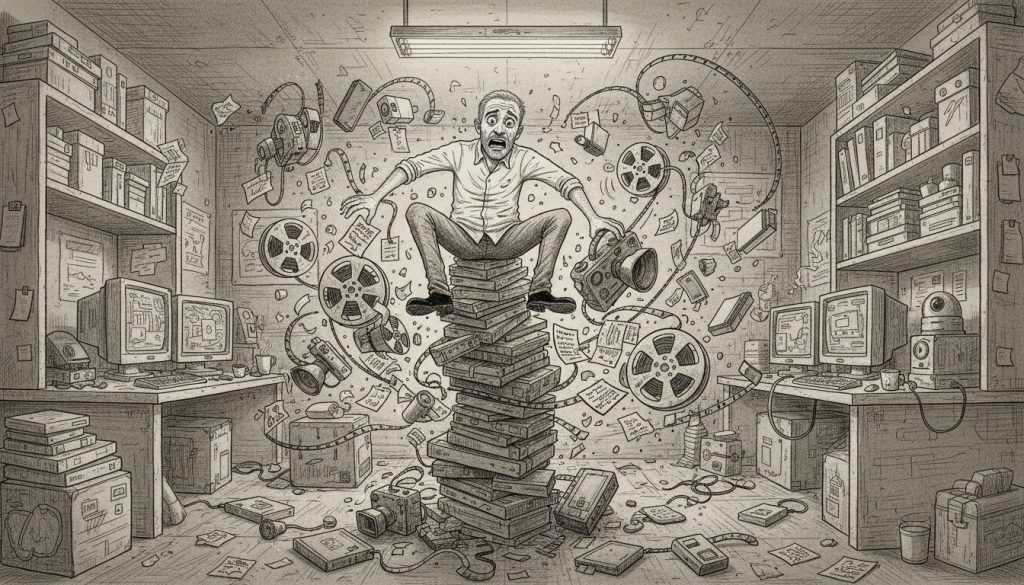
You filmed a Zoom call, cut it to a peppy track, and called it proof. You got a smiling customer to say three nice things and expected revenue to salute. That isn’t evidence. That’s decoration.
Here’s the part nobody says out loud: the market doesn’t owe your content attention. It barely owes you patience. If the story is mush, if the numbers are fog, if your edit hides the mess instead of naming it, people smell it. They don’t just scroll. They forget you exist. Video case study production is not B-roll plus compliments. It is a surgical strike on doubt. It is story with receipts. It is the only piece of content your sales team can point at and say, watch this, it happened.
You want trust. You want speed through the funnel. You want proof at scale. Then stop treating proof like a collage.
So This Is Where Video Case Study Production Starts Telling The Truth
Let’s drop the theater. You need video because your buyer is drowning in claims and allergic to adjectives. A tight case study cuts through because it shows stakes, context, friction, and outcomes. Not slogans. Not mood boards. Decisions.
When it lands, it doesn’t just “raise awareness.” It arms the champion with ammunition. It makes sales calls shorter. It keeps procurement from asking the same anxious questions. It’s the one asset that survives ego-driven rewrites because it’s not about you. It’s what happened.
If you botch it, the cost is real. Generic stories kill trust. Vague metrics stall deals. Sloppy shoots waste your customer’s goodwill, your team’s calendar, and your ad budget. Then you try to fix it in post and discover you can’t edit missing clarity into existence. You reshoot. Timelines slip. Everyone gets a little more cynical, including the next customer who now doesn’t want to be on camera.
According to Vidico, “Your success stories deserve great storytelling. We’re experts at transforming your testimonials, case studies, and all forms of social proof into captivating success stories.” This highlights the importance of thoughtful preparation and capturing genuine insights to make the video impactful.
Yes, I’m being harsh. Because this matters. A focused case study with one clear win can spike demo requests. We’ve watched it happen. A B2B team tightened the story, led with a measurable outcome, and saw qualified interest jump because prospects finally saw themselves on screen, problem to result, without the fluff. The system is irritating and useful at the same time. You don’t have to love it. You do have to respect the craft.
Here’s The Part Where We Turn Heat Into Marching Orders
Start Small, Start Visible
Don’t try to capture the entire customer journey in one video. Pick one clear win or problem and focus your video case study production around that. It keeps your story tight and easier to film. One clear message beats a scattered one every time.
Build the Version That Scales
Once you have a simple format that works, create a repeatable process. Outline your questions, define shooting schedules, and set editing guidelines. Having a template saves time and keeps each video focused on what moves your audience.
Make It a Habit, Not a One-Off
Video case studies shouldn’t be special occasions. Schedule regular interviews and shoots with customers throughout the year. The more you do it, the smoother the process gets, and the fresher your content remains.
Know When It’s Working (and When It’s Not)
Look beyond views and likes. Track whether your video case studies generate real leads or sales. If a video isn’t driving action, dig into why. Maybe the story isn’t clear, or the visuals don’t hold attention. Adjust your production accordingly.
Impact Plus notes, “hearing their journeys from good to great was incredibly rewarding” and identifies obstacles including underestimation of the effort required and gaps in measuring effectiveness. This underscores the need for continual evaluation and learning from each video project.
Last Thing Before The Elevator Doors Close
You can keep dressing up testimonials like parade floats and hoping someone salutes, or you can build the kind of proof that changes how a room breathes. Treat it like craft and it pays like compounding interest. Treat it like content and it dies like content. The camera does not forgive lazy thinking, and your buyer has learned to spot the glaze.
Get precise. Get honest. Or get ignored.
If you’re done improvising your growth plan, we help companies turn chaos into systems that actually ship. Book a Strategy Session.