
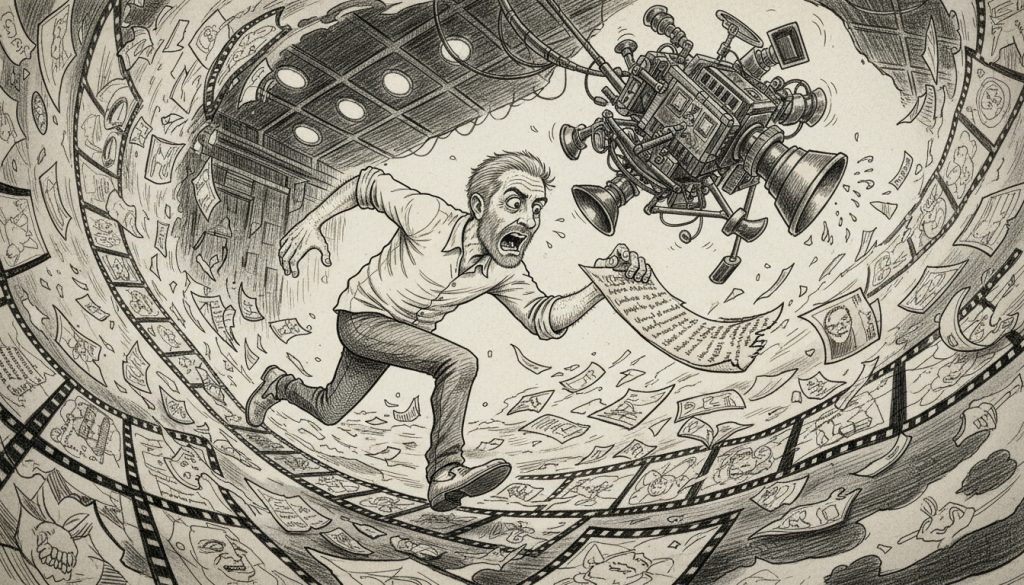
I just walked out of a kickoff where someone said we will find it in the edit. That is not confidence. That is gambling with payroll. You do not need another brainstorm. You need a video script template. Without it, you confuse talent, stall the crew, and punish your audience. The camera is not a mind reader. It will not fix vague thinking. Every time you skip structure, you buy hours of chaos and call it creativity. Then you wonder why the final cut feels like a meeting that never ended.
Stop pretending the issue is budget or some fickle algorithm. The issue is narrative malpractice. Teams wing the story, pad the runtime, and pray a flashy opener distracts from the mess. It never does. Slack fills with late notes. Reshoots eat the calendar. And somehow the CTA still whispers.
So This Is Where The Video Script Template Proves Its Worth
Here is the part where the eye roll ends. Templates sound boring until you pay for the fifth rewrite. A simple structure saves real money because it collapses indecision. It reduces woolly ideation, sharpens what the viewer should feel, and sets the shape for every shot and sentence. Not glamorous. Brutally effective.
One mid-size team we worked with burned 30 hours rewriting scripts because no one agreed on the bones. That is a week of wages traded for circular debate. A shared template would have forced decisions earlier. Who is this for. What do they need to feel. What happens next. When those live on the page, your director stops guessing, your editor stops wandering, and your message stops melting.
Templates also protect attention. Viewers do not follow mixed signals. If your voiceover fights your visuals or your story doubles back, they leave. That hurts trust and wrecks ROI. A clear structure aligns the message, the shot list, and the call to action so your story marches instead of meanders. You are not limiting creativity. You are giving it rails.
Finally, the template is an agreement. It locks in the spine so stakeholders argue about ideas, not interpretations. You get fewer late pivots, cleaner handoffs, and a final cut that actually looks like the pitch. Wild concept.
Here is the moment where heat becomes habit
Start Small, Start Visible
Build a simple video script template with key sections: hook, problem, solution, call to action. Use it for one project to see how it works in reality. Don’t try to write a novel, just the basics that keep the story on track.
Build the Version That Scales
Once your team has tested the template, refine it based on what worked. Add prompts that help with tone or pacing. This version becomes your go-to for all videos. It saves you reinventing the wheel every time and keeps quality steady.
Make It a Habit, Not a One-Off
Train the team to use the video script template on every project, no exceptions. Make it part of your workflow so it becomes second nature. Without discipline, even the best template ends up gathering dust.
Know When It’s Working (and When It’s Not)
Review the videos made with your script template. Check if they meet your goals and hold viewer attention. If not, dig into the scripts to spot where the template failed or where it needs adjustment. Use these insights to improve it continuously.
The Last Loud Thing Before The Silence
A template is not a crutch. It is the spine you refused to admit was missing. Skip it and you will pour money into reshoots, patch holes in the edit, and still publish something that feels tired before it lands. Invest in the bones and the muscle follows. Even if hard data on script templates is thin, the discipline is not new. Post-mortem culture exists for a reason. As one guide puts it, a structured review tightens alignment and message clarity over time. According to Waltz Creative, “A structured post-mortem helps teams capture learnings and align on the next steps, improving efficiency and messaging clarity over time.” Translate that to scripting, and you stop wasting hours on wandering drafts and start building cuts that carry weight.
Most teams treat video like a road trip with no map and a full tank. They drive fast, get lost, then brag about the views. The work does not need more gas. It needs directions.
If you’re done improvising your growth plan, we help companies turn chaos into systems that actually ship. Book a Strategy Session.