
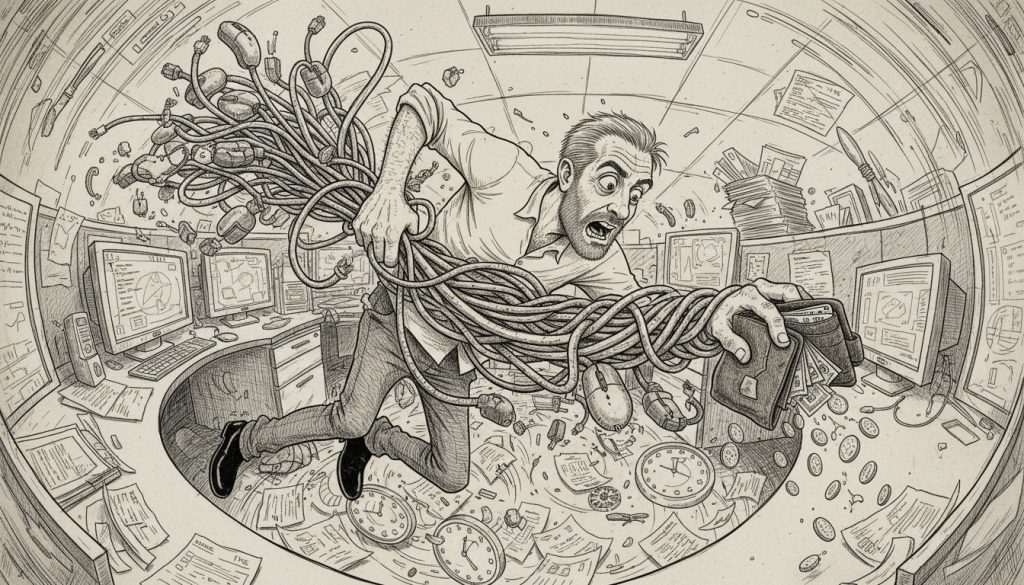
I just walked out of another strategy sync where everyone celebrated an install like it was a launch. Boxes checked. Access granted. No plan. onboarding saas software keeps getting treated like a setup screen, not a behavior change. You bought a subscription and called it adoption. Then you stare at an empty dashboard and ask why the numbers look like a desert.
Stop betting on osmosis. Teams are buried. Tabs stacked, deadlines shuffling, attention pulverized. If a tool doesn’t win a job in their day inside a week, it becomes a tile they pretend not to see. The invoice keeps charging. The habits never change. You didn’t implement software. You adopted a new form of avoidable drag.
The Bill Comes Due When The Clicks Don’t Become Work
Here’s the part where I admit the uncomfortable truth. The software isn’t the hero or the villain. Your process is. onboarding saas software matters because it decides whether your spend turns into throughput or theater. Adoption is not a vibe. It is visible work moving faster, with fewer handoffs lost in transit, and data you can actually trust when the board wants a number.
When onboarding is sloppy, your pipeline gets anemia. Campaigns ship late because no one knows the new path. Journeys fragment, attribution breaks, and the reporting deck becomes interpretive art. You can easily bury five figures a month on tools while your team still runs half of their workflows in spreadsheets and private Slack threads. That is not resistance. That is your rollout failing to earn a place in the real day.
And yes, the boring grind works. Clear owners. Sequence the habits. Remove the extra clicks. Teach only what they need to win this week. If you want love for the tool, make it the shortest road to the team’s next win. If you want resentment, make it homework.
Breathe Once, Then Point It At The Work
Start Small, Start Visible
Kick off onboarding with a clear goal for your marketing team. Instead of trying to roll out every feature, focus on one or two quick wins that tie directly to their daily work. This makes the software more relevant and easier to learn. It’s easier to get buy-in when you can demonstrate a small win early, like improving email open rates with a new segmentation feature.
Build the Version That Scales
Once you see what works, it’s time to systemize. Document the onboarding steps that actually helped your team get results. Build clear playbooks or checklists for future hires or departments. Don’t keep everything in your head or scattered notes. A repeatable onboarding process prevents the chaos that comes with growth.
Make It a Habit, Not a One-Off
Onboarding isn’t a one-time project; it’s a habit that needs nurturing. Schedule follow-ups and reviews. Encourage the team to ask questions and share tips. Without this, the process slides back into confusion and half-used software. Integrate onboarding check-ins into regular team meetings or project updates.
Know When It’s Working (and When It’s Not)
Don’t just track surface-level metrics like login frequency. Dive into how your marketing team actually uses the software day-to-day. Are they completing key workflows? Is campaign data flowing correctly? Watch for red flags like abandoned projects or repeated help requests. Understanding these signals helps you course-correct before a problem becomes a crisis.
If you need receipts to calm your inner skeptic, here’s what the research crowd keeps repeating, in their own words and links:
According to UXCam, “Best practices to boost retention include streamlining sign-up, highlighting value early, personalizing onboarding, interactive guidance, and showing progress,” which align with focusing on small, visible wins and nurturing onboarding as a habit for sustainable success.
SkiIljar notes that tailoring onboarding processes to customer segments, leveraging automation and personalization, and monitoring success metrics are crucial to effective SaaS onboarding, reinforcing the importance of knowing when onboarding is working and aiming for a scalable version of onboarding.
Last Thing Before The Lights Cut Out
Tools don’t fail in a blaze. They fade. One more skipped training. One more workflow run the old way. One more dashboard no one opens. It’s the quiet kind of waste that looks harmless until the quarter ends and your projections don’t. If you want the tool to change the work, change the work so the tool is the shortest path to done. The rest is ceremony.
If you’re done improvising your growth plan, we help companies turn chaos into systems that actually ship. Book a Strategy Session.