
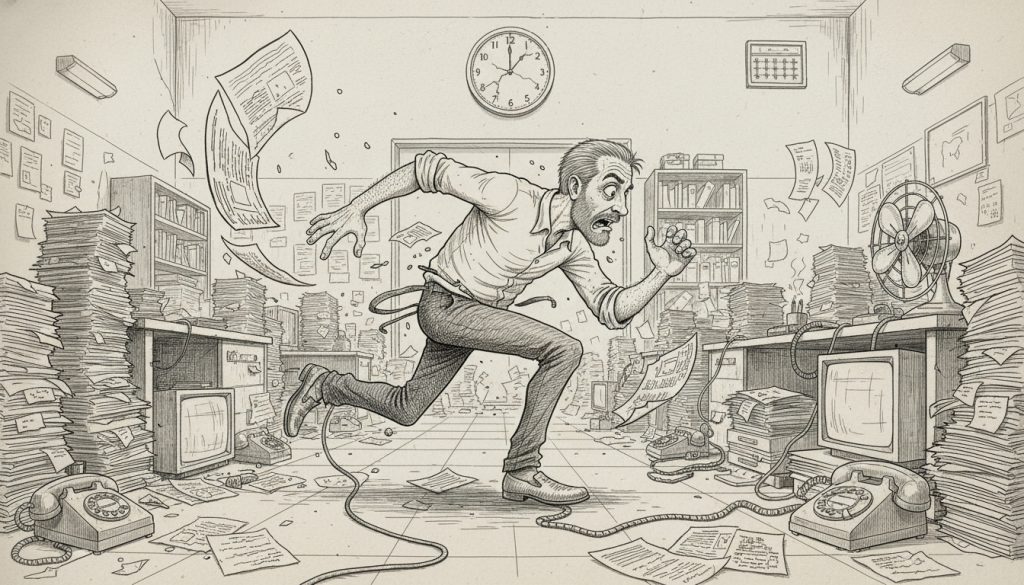
You keep shipping content like the audience owes you a verdict. Dashboards blink, someone screenshots a chart, and the team pretends a KPI is a conversation. It isn’t. It’s a postcard from somewhere you’ve never been. You’re not listening. You’re waiting for the metrics to absolve you.
Here’s the quiet crime. You publish, you pray, you move on. Weeks later you hold a retro that reads like a diary entry from a different company. Then you wonder why nothing compounds. Your content feedback loop was never designed. It was guessed. And guesswork is how budgets evaporate while everyone smiles through the standup.
I’ve watched teams treat feedback like weather. They talk about it, they can’t change it, and they use it to excuse inaction. Meanwhile the market moves. Customers leave breadcrumb trails you step over because no one owns the broom. This is not a mystery. It’s neglect dressed up as velocity.
Fine. The Content Feedback Loop Actually Pays The Bills
Yes, I’m roasting you because it matters. The machine is dumb and useful at the same time. Without deliberate inputs, you steer by last quarter’s gossip. With them, you catch the tiny signals that separate a sinking thread from a winning message. It’s not romance. It’s rent.
The delay is the tax. Publish ten assets, wait a month, then realize three were duds and two almost worked if anyone had spoken up on day two. That lag bleeds relevance and money. Your CFO does not care that a graph went up if Sales can’t tell you which sentence got the call back. The truth is boring and brutal. You need fast, tight feedback or you are just decorating the internet.
And yes, this system annoys creatives. It limits the fantasy that the work will speak for itself. Sometimes it does. Most days it whispers. You need people, signals, and a ruthless cadence to translate the whisper into a rewrite before the window shuts. That is how grown-up marketing behaves when the scoreboard is real.
Time To Turn The Rant Into A Routine
Start Small, Start Visible: Build Your Content Feedback Loop Today
Begin with the simplest, most direct way to gather feedback on your content. This could be quick surveys after download, a dedicated Slack channel where sales or customer service share content reactions, or tracking specific engagement numbers.
Don’t aim for a perfect, all-encompassing system from day one. A small but visible loop gets everyone seeing results and buys time to improve. The goal is to get a functioning feedback loop you can trust — and then grow it.
Systemize What’s Actually Working
Once you’ve got a basic feedback system in place, document what’s bringing value. Which data points actually inform decisions? Which conversations produce insights? Then formalize those into routine processes.
Turn feedback collection into part of every content launch. Make it repeatable, predictable, and actionable. When you systemize your content feedback loop this way, you reduce noise and boost focus.
Run the Review Loop
Build a habit around the feedback. Short, regular meetings where the team reviews the data, hears frontline voices, and decides next steps keep the feedback loop active.
Without this discipline, data piles up unused. Feedback loops aren’t just about collecting info — they’re about using it to adjust your content fast before it’s too late.
Know When It’s Working (and When It’s Not)
Pay attention to the signals that tell you your content feedback loop is alive. This might be rapid iteration cycles, noticeable shifts in engagement, or sales teams calling out messaging wins.
Watch for red flags too. No fresh feedback after campaigns or slow responses from your team means the loop is clogged. Spotting these early saves you from repeating the same old mistakes.
If you need proof the mechanics aren’t mythical, go stare at the boring scaffolding that works. According to Product School, collection, analysis, action, and follow-up are not hobbies. They’re the cycle that keeps signal from dying in the hallway. And when you want to see how user input turns into edits that ship, Moz outlines a voting-to-update loop that tracks whether the changes actually moved the needle. Even survey hygiene matters. The pattern in UX Design Collective is simple. Ask better, smaller questions. Get sharper, faster answers.
Last Thing Before The Speakers Cut Out
You don’t have a content problem. You have a silence problem. Right now your program looks like a kitchen where the tickets keep printing and the grill is cold. Stop pretending the meal will cook itself. Build the line, hear the orders, and send plates while they’re still hot. The market won’t wait for your debrief.
If you’re done improvising your growth plan, we help companies turn chaos into systems that actually ship. Book a Strategy Session.