
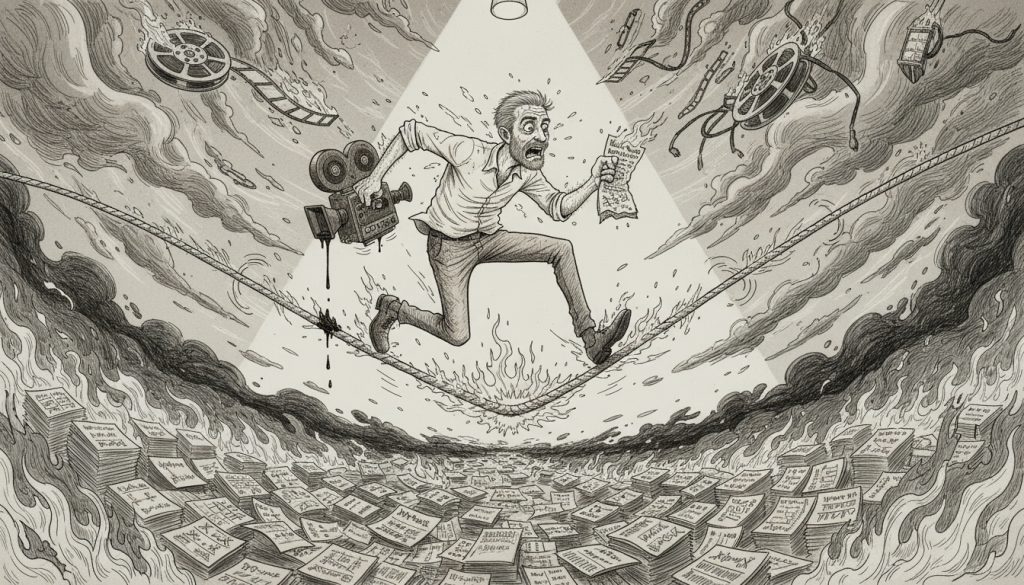
I just watched another team plan a shoot in a Slack thread. No outline. No spine. Just vibes and borrowed confidence. Then they wonder why the edit looks like a ransom note.
Here’s the quiet crime: you think the camera will save you. It won’t. A video is a mirror. If your thinking is a mess, the footage tattles. The fix starts with a video script outline, not a heroic all-nighter in Premiere. Say what matters, in the order it matters, before you roll. Otherwise you are chasing shots, apologizing to stakeholders, and stapling a call to action onto a story with no pulse. That isn’t creativity. It’s institutional amnesia with a color grade.
Here’s Where The Video Script Outline Earns Its Keep
I get it. You want momentum. You want to feel the crew moving. But skipping structure is a tax you pay later with interest. When the storyline is foggy, every meeting becomes a search party. Every edit becomes a debate. And every delay turns leadership into weather forecasters, trying to predict when the storm you created will pass.
This is not about perfection. It is about alignment. Without a clear spine, you burn days on reshoots, Franken-b-roll, and three different versions of the same point. The budget bleeds. Timelines slip. Your editor becomes a therapist. Worst part is the invisible cost. Stakeholders stop trusting your dates. Sales stops trusting the promise. The brand looks tired even when the footage is pretty.
Picture this: halfway through production, someone notices the main benefit never actually gets said. Not implied. Not shown. Just missing. Now you are rebuilding scenes, reprinting shot lists, and pretending the schedule can stretch without snapping. That single oversight came from skipping the one cheap step that would have caught it.
And audiences? They vote with the back button. If your message wanders, they leave. If your story stalls, they mute. Confusion feels like static in the head. People cut the static. You can be clever. You can be loud. But if the path is crooked, attention dies on the hill.
The outline is not a cage. It is a trailhead. It tells the crew what we are doing and tells the editor what we are not doing. It is the difference between a shoot that hums and a shoot that groans. It is the line between purposeful cuts and panic trims.
Fine. Here’s The Part Where We Stop Guessing.
Light the Match, Don’t Build the Bonfire
Start with the simplest structure you can. Define the core message, key points, and the call to action. This is your video script outline. It doesn’t need to be detailed dialogue — just a clear order of ideas and how they connect. Keep it lean so you can test and adjust quickly.
Build the Version That Scales
Once your outline proves solid, flesh out the details. Add notes on tone, timing, and visuals. This step creates a repeatable template for future videos. The goal is to make drafting faster by systematizing what works.
Keep It from Sliding Back into Chaos
Make outlining a non-negotiable stage in every video project. Use check-ins to review and approve before moving on. Treat it like a gateway that keeps the team honest and aligned. Skip it once, and you’ll feel the ripple effects down the line.
Know When It’s Working (and When It’s Not)
Use your video script outline as a reference point for the final product. If the video drifts from the outline, ask why. If your audience’s engagement dips, revisit the outline’s structure first. The right outline signals when you’re on track or off course before it’s too late.
If You Need Receipts, Not Vibes
If you want a baseline structure that keeps intent sharp, the walkthrough from Maekersuite lays out a simple intro-to-CTA arc you can actually ship. Use it to anchor your sequencing before you start dressing it with brand visuals.
Continuous improvement is not a mood, it is a meeting. Borrow a few postmortem moves from Workshopper to run quick retros after each release so you stop repeating the same avoidable sins.
And when you need a repeatable structure for case studies, the patterns in Content Beta are a fast way to standardize outcomes without sanding off the story.
Last Thing Before The Alarm Cuts Out
You are not paid to wing it. You are paid to make meaning under pressure. An outline is not bureaucracy. It is the cheap insurance that lets your team be brave without getting lost. Think of it like taping the route on the gym wall before the climb. You can still improvise a move or two, but you are not pretending gravity is negotiable.
Do the boring step so the risky parts can shine.
If you’re done improvising your growth plan, we help companies turn chaos into systems that actually ship. Book a Strategy Session.